EPA, council dodge responsibility after significant Sydney oil spill
If you didn’t hear about this spill at the time, you’re not alone. There was little fanfare when diesel entered Alexandra Canal in Sydney’s inner west in June, despite the incident leaving dozens of waterbirds coated in oil and triggering a weeks-long wildlife rescue operation. More than 80 marine birds, predominantly pelicans, were reported to WIRES following the spill, covered in thick black toxic fuel and requiring significant rehabilitation.
But the wildlife impact is only part of the story. Questions remain about how quickly the pollution response began, who is responsible for enforcement action, and whether those responsible will actually face prosecution. Niall Edwards-FitzSimons investigates for Goolay’yari Cooks River Radio.
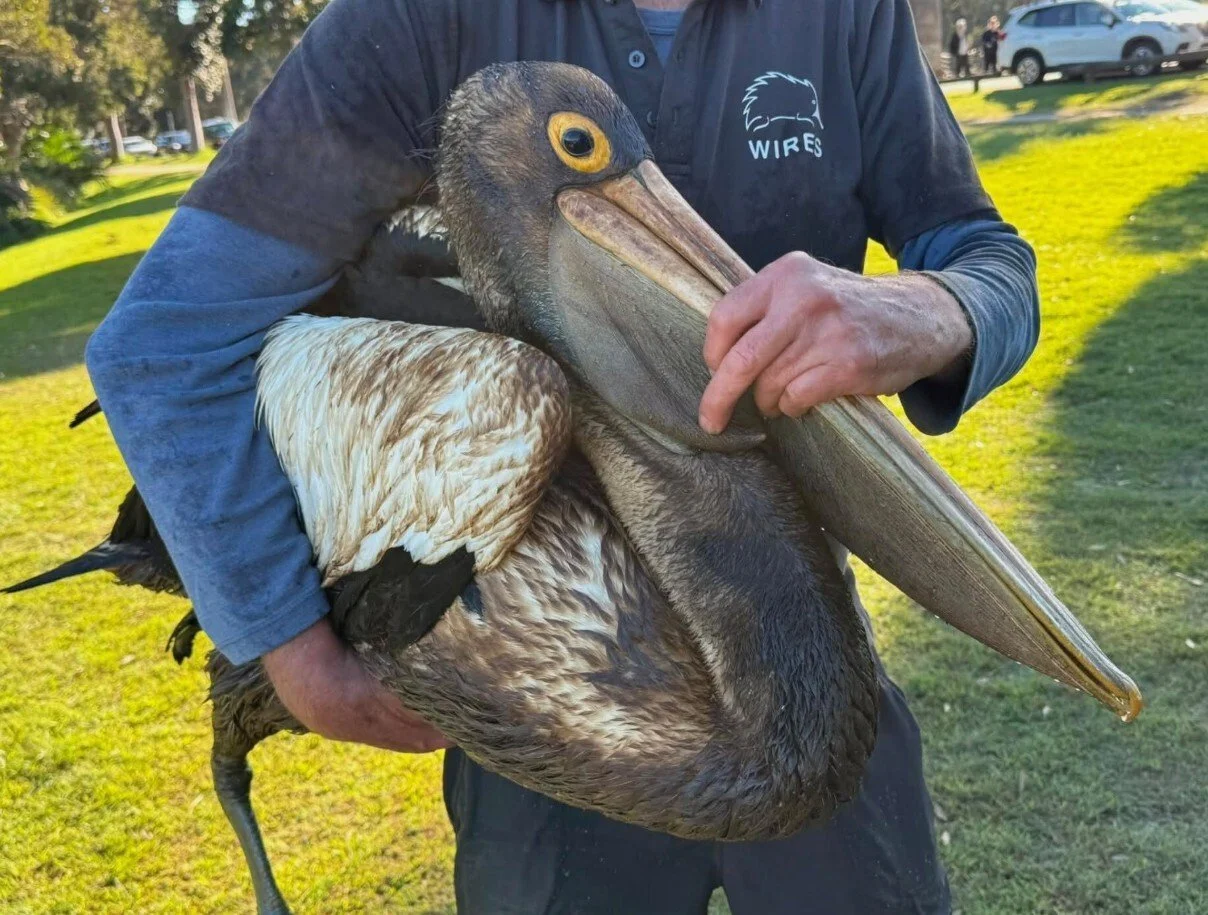
A pelican covered in diesel is handled by a wildlife volunteer. WIRES
A history of abuse
The Alexandra Canal has a long history of environmental catastrophe.
That history stretches back well before the waterway was known by its present name. After thousands of years of healthy management by local Aboriginal people it was given the name Shea’s Creek by the colonists, and for generations after it was treated as a convenient industrial drain rather than a living waterway. The creek and surrounding land was used for activities that left behind contaminated sediments, altered shorelines and a legacy of pollution that still shapes how the canal is managed today.
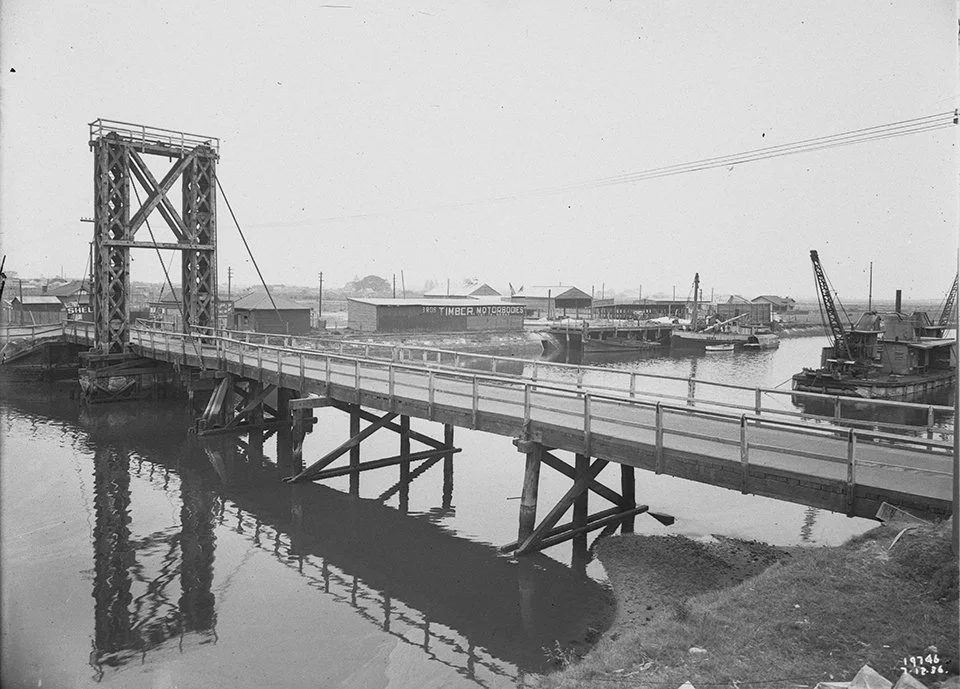
In the early 20th century, the Alexandra Canal was an industrial wasteland. State Library of New South Wales [d1_25231 / GPO1 25231]
The EPA formally declared the bed of Alexandra Canal a remediation site in 2000, citing contamination in the sediments including chlorinated hydrocarbons, PCBs and metals. A subsequent EPA remediation order, issued to Sydney Water, described the contaminated sediments as presenting a “significant risk of harm to human health and the environment”.
Yet the canal today can look deceptively natural.
Mangroves have returned in some places. Mature trees line the banks. The waterway supports pelicans, cormorants, ducks, herons and other birds, as well as fish, crabs and other wildlife. It’s connected to a broader estuarine system that provides habitat in the middle of a heavily urbanised and industrialised part of Sydney.
So when something like this occurs, it’s bad news for this fragile returning ecosystem.
The first concern is the response time
The spill occurred during the removal of an old underground fuel tank at a construction site in Alexandria. A City of Sydney spokesperson said the tank contained “some oily water.” Sydney Water confirmed the pollutant that entered the waterway was diesel fuel.
The NSW Environment Protection Authority (EPA) says it responded to reports of an oily sheen in Alexandra Canal on June 4. Yet Sydney Water, the agency responsible for the canal, says it wasn’t notified until June 6, two days later.
That delay matters. Alexandra Canal is a tidal waterway connected to the Cooks River and ultimately Botany Bay, meaning pollutants can be transported beyond the immediate site with the movement of the tide. 48 hours means two sets of high and low tides.
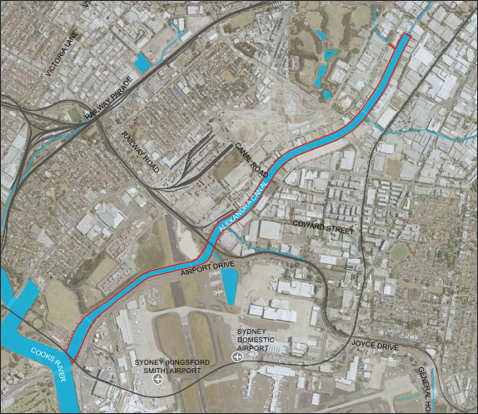
The canal flows into the river and then Gamay/Botany Bay. Sydney Water
Neither the EPA, the City of Sydney nor Sydney Water directly answered questions about what caused the delay.
Fire and Rescue NSW, which was in place on June 5, “led the initial response” according to the EPA. EPA officers attended to provide advice on environmental impacts and liaised with wildlife rescue organisations.
When it was told, Sydney Water said it “immediately commenced its standard incident response”, notified relevant authorities and worked with Fire and Rescue NSW, the EPA, Port Authority of NSW and other agencies “to coordinate containment and clean-up activities” which took place between June 10 and June 18.
By June 19, Sydney Water said follow-up sampling indicated that recovery of the canal was satisfactory and that relevant agencies had determined the canal had been returned to its pre-spill condition.
Bird life impact
By then, however, the pollution had already had a much wider impact on wildlife. And the affected birds were not confined to the immediate vicinity of the canal. Sightings were reported across Sydney, including Narrabeen, Centennial Park, Hurlstone Park, and Wolli Creek, and even Woy Woy on the Central Coast.
One particularly striking case involved a pelican found in a paddock at Woodville in the Hunter Valley, around 140 kilometres from the spill. The bird was so heavily stained that the photographer who discovered it didn’t recognise what they were looking at.
The rescue effort continued for weeks as wildlife organisations, emergency services and members of the public searched for affected birds. Taronga Zoo accepted a number of pelicans and teams there spent days painstakingly removing oil from their feather with toothbrushes.
More than 80 marine birds were reported, but WIRES has said it believes the true number was likely considerably higher, with some birds potentially dispersing to remote waterways where they were less likely to be seen.
These impacts are serious, and substantial. Who will hold the construction company to account for the wildlife harmed by the spill and the pollution of the waterway?
Who is responsible?
As the spill occurred at a site that didn’t require an Environment Protection Licence from the NSW EPA, the City of Sydney is the appropriate regulatory authority in this case. The EPA confirmed that after its initial response, the matter was handed to council.
The council, however, has characterised its role narrowly. “The City of Sydney’s role in this matter is to determine whether the site owner has adhered to the conditions of their development application,” a council spokesperson said. “In this instance, the remediation referred to is the remediation of that site – not the canal, which lies with Sydney Water.”
Against that background, I asked the City of Sydney whether it was pursuing enforcement, potentially including prosecution under the Protection of the Environment Operations Act 1997, against the company or individuals involved.
The council didn’t say.
Instead, it said it was continuing to work with the environmental consultant and site auditor to ensure “all necessary investigation and sampling is undertaken”, and that any additional remediation required was completed in accordance with environmental and planning requirements. “Any enforcement action will be dependent on the results of that investigation,” the council spokesperson said.
When I asked when the investigation would be completed, and what further evidence was required before enforcement could begin, the answer was that the investigation was still ongoing.
What about the EPA?
While Council is authority with immediate responsibility for the spill, the EPA has powers under the Protection of the Environment Operations Act 1997 to take enforcement action independently.
I asked whether, given the spill crossed local government boundaries and flowed towards the marine environment, the EPA would exercise its powers under section 217(1) to institute proceedings.
The EPA didn’t answer the question. Instead, it referred back to its original statement that the incident had been handed to the City of Sydney as the appropriate regulatory authority. This creates an awkward division of responsibility.
The EPA says council is the appropriate regulator. Council says its investigation is focused on compliance with the site's development approval. Sydney Water is responsible for the canal and says it undertook the clean-up.
The incident therefore raises a broader question: when a pollution event begins on private land but rapidly becomes a waterway and wildlife incident, is responsibility sufficiently clear to ensure a rapid response and meaningful enforcement?
Neither the NSW Environmental Protection Agency or City of Sydney Council have committed to enforcement
And there’s another conspicuous absence from the responses: the identity of the company responsible for the spill.
Both the EPA and City of Sydney were asked whether they were aware of the identities of the construction company and associated individuals involved, and whether the company would be identified publicly.
Neither answered.
Whether the company will be held responsible for the pollution that escaped the site and entered the public waterway remains to be seen.
A clean canal — but an unresolved question
Sydney Water says the canal had returned to its pre-spill condition by June 19. But a clean-up finding does not necessarily resolve the questions raised by the incident itself.
This spill showed how quickly that wildlife can be exposed. Birds moved through connected waterways, became coated in diesel and were found far from the original source. The canal may have looked largely unchanged to passers-by, while wildlife rescuers were still searching for affected birds weeks later.
The immediate environmental response ultimately involved multiple agencies and wildlife organisations. But the sequence of events raises a basic governance problem: who is responsible when an incident moves rapidly from a construction site, into a stormwater channel, through a tidal canal and towards the marine environment?
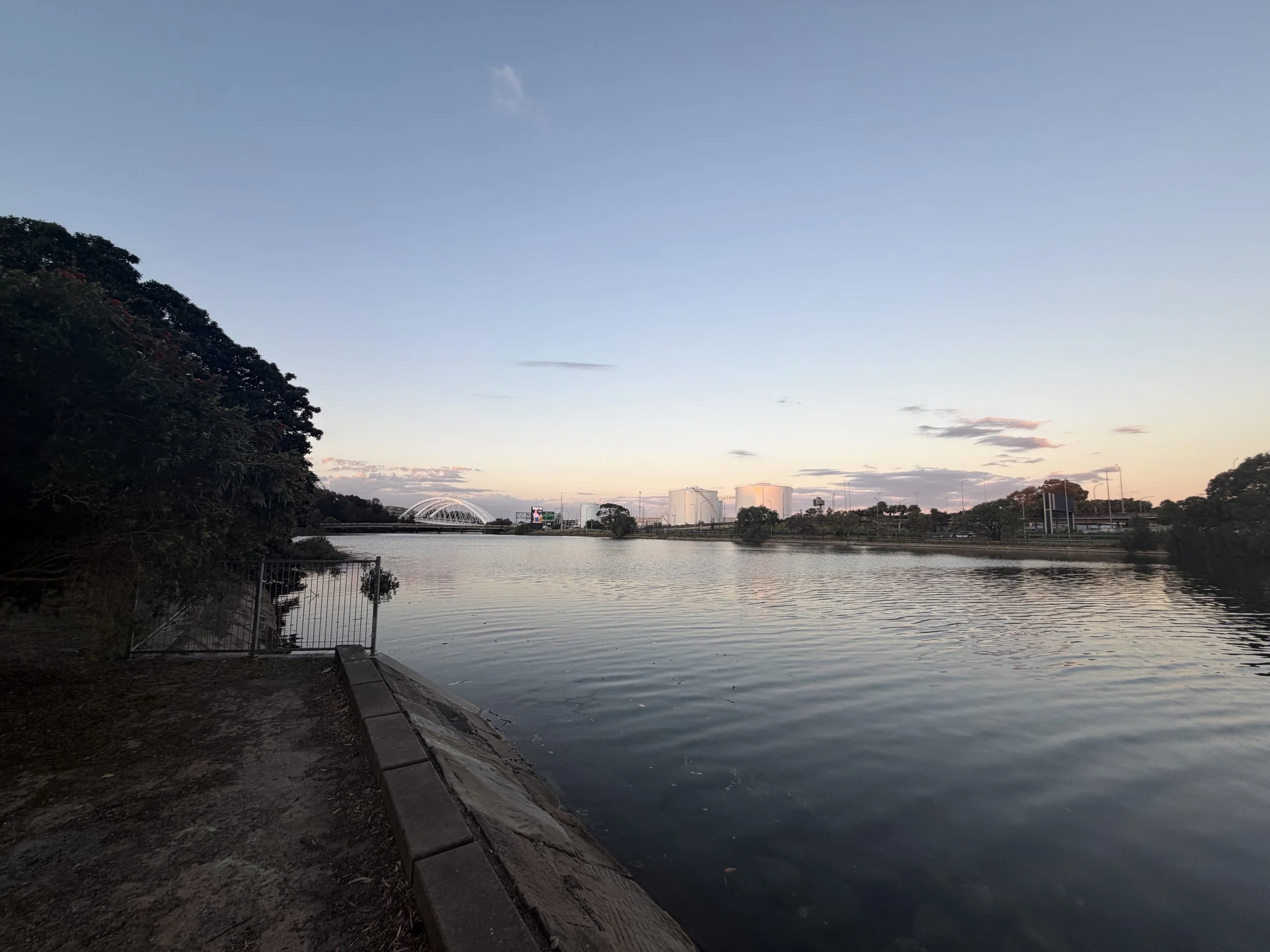
Despite its beauty, the Alexandra Canal is known as Sydney’s most toxic and neglected waterway
Sydney Water says it was notified on June 6 and then “immediately commenced its standard incident response”.
The EPA says it handed the matter to council after the initial containment response.
Council says its investigation into compliance with the development application is ongoing.
What none of the agencies has explained is why those accounts leave a gap of up to 48 hours between the initial report and Sydney Water being notified.
Nor has either the EPA or council said whether the company responsible will be publicly identified, or whether prosecution will be pursued.
Meanwhile, the birds kept turning up, covered in black diesel and in need of rescue.
The canal may have been cleaned and the immediate pollution contained. But Alexandra Canal’s history shows that environmental damage can accumulate quietly, while its recovering health and returning wildlife demonstrate what’s at stake when pollution enters the waterway.
The questions about how the incident was handled, and who ultimately should be held accountable, remain unresolved.
– Niall Edwards-FitzSimons for Goolay’yari Cooks River Radio
To read all the statements we received for this story in full: click here
To hear more about this story, listen to the podcast version below, or on podcast platforms: